
Sex Offender Checks in Chester County
The Pennsylvania Megan's Law website is the primary official channel for a Chester County registry search. PSP publishes the statutory public subset of registration information, not every sexual-offense conviction and not a complete criminal history. County filtering is useful when the location is known, while a name search helps when geography is uncertain. Municipality, ZIP, address, radius, map, and list views provide other ways to narrow results where the live interface offers them.
Before searching, collect the most reliable non-sensitive facts available: a full name or spelling variant, approximate location, and enough identifying detail to avoid confusing people with similar names. The registry can change when a registrant reports an address, employment, education, vehicle, or status update. A result therefore answers a public-notification question at the time displayed; it does not establish a person's full history or current conduct.
The PSP registry landing page shows the official starting point.
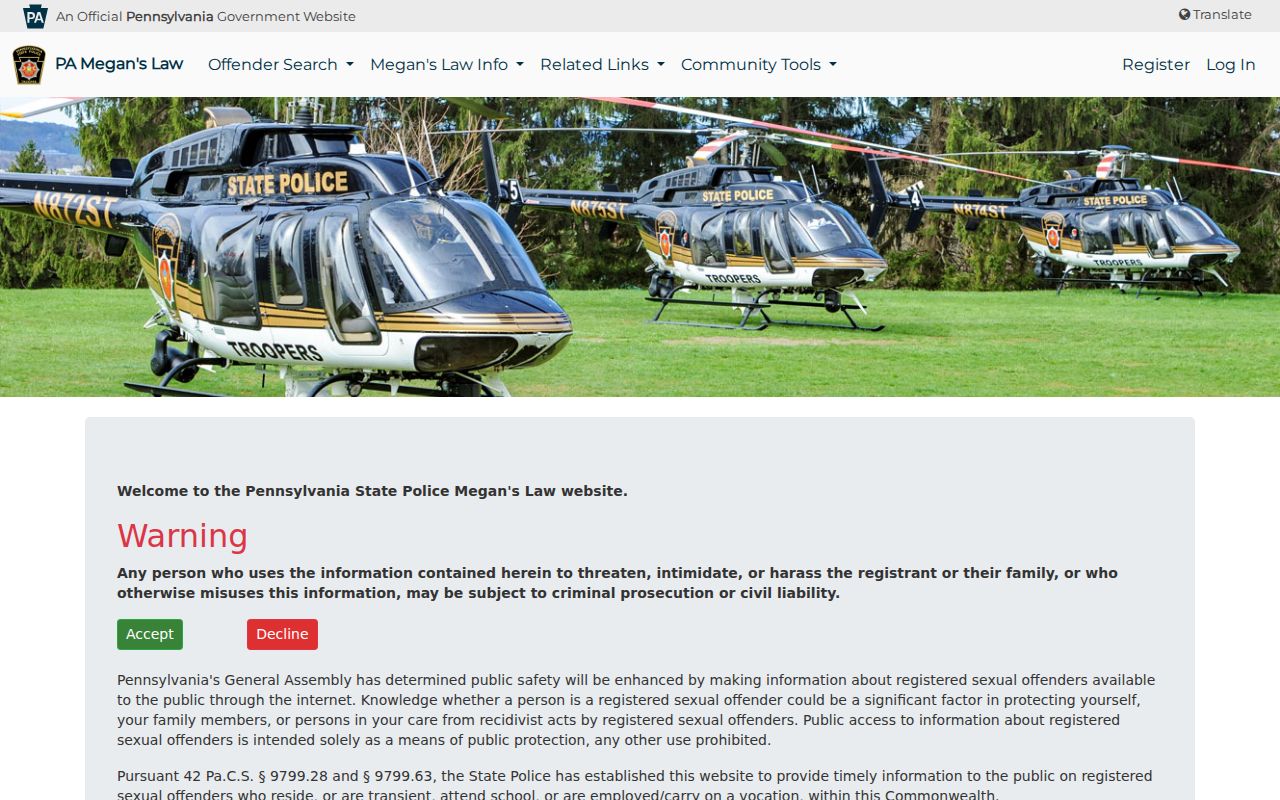
This official interface keeps the search, warnings, and Pennsylvania reporting information in one place.
Why the Registry Is Not Criminal History
A registry profile exists because Pennsylvania law requires public notification for covered classifications. It is different from a PSP PATCH certificate, a UJS docket sheet, a police incident report, or a Clerk of Courts file. Some people convicted of sexual offenses may not appear because the governing law does not require a public listing, while a listed person may have other cases that the profile does not show. For a broader record question, use the county's official criminal-history access channels.
- Registry listing
- The public fields PSP may display for a covered registrant.
- Court docket
- The filed charges, events, dispositions, and sentence recorded by a Pennsylvania court.
- Repository record
- Fingerprint-supported arrest cycles and reported dispositions maintained by PSP.
Keeping these products separate prevents a common error: treating the registry as proof that nobody else has a relevant conviction, or treating one profile as the person's complete record.
How to Search the Pennsylvania State Police Megan’s Law Public Website
Use the warning and search controls on the official site, then narrow Chester County results with the strongest available identifier.
- Open the PSP Megan's Law website and read the conditions and public-safety warning before continuing.
- Select a name mode or geographic mode. Choose Chester in the county field, or supply a municipality, ZIP code, or address when that better fits the question.
- Review list or map results without assuming that proximity or a shared surname proves identity.
- Open the profile and compare the photograph, physical description, address, aliases, offense, classification, and compliance information.
| Field or mode | Type | Required | Use |
|---|---|---|---|
| Name | Tab/text | No | First and last name; spelling and aliases matter |
| County | Dropdown | No | Select Chester |
| Municipality or city | Text/dropdown | No | Narrows within the county |
| ZIP code | Text | No | Five-digit geographic search |
| Address and radius | Text/dropdown | Conditional | Geographic proximity where enabled |
| Map or list | View control | No | Changes result presentation |
Radius choices may change as PSP updates the interactive service, so rely on the distances actually displayed rather than an old screenshot. Note: A map pin reflects reported public data and is not a prediction of risk.
Chester County Address and Radius Results
Address searching is most useful for neighborhood awareness when the exact street is known. Enter the location carefully, select a live radius option, and compare map and list results. ZIP-only searches can cover a broad area and city names can cross postal boundaries, so the county filter adds helpful context. A result's distance from an address does not mean the person visited, targeted, or even knows anyone at that address.
The strongest practice is to open each potentially relevant profile and check its specific address or transient status, verification date, and identifiers. Do not copy a map result into an accusation. When the location or compliance flag appears wrong, save the official profile URL and contact PSP or local law enforcement with the discrepancy.
Inside a Registry Profile
Public profiles combine identity, location, offense, classification, and compliance fields authorized by Pennsylvania law. Availability can differ by category and circumstance.
| Name and aliases | Registration name and disclosed alternate names. |
|---|---|
| Photo and description | Current photograph plus sex, race, height, weight, hair, eyes, age presentation, and identifying marks where public. |
| Location | Residence or transient status and, where required, employment or school information. |
| Offense | Description, statute or jurisdiction, conviction date, and authorized victim category. |
| Classification | Tier or Sexually Violent Predator status and related notification effect. |
| Compliance | Registration status, verification date, and noncompliance information when published. |
| Vehicles | Vehicle information when disclosure is required. |
Read every field together. Birth information and physical descriptors help distinguish a common-name match, while verification information indicates the record's reported timing. Missing details may reflect public-access rules rather than an incomplete investigation.
PSP Registry Versus NSOPW
The PSP site is best for a Pennsylvania-focused Chester County query. The National Sex Offender Public Website search is a federal gateway that sends searches across participating jurisdiction systems. NSOPW is useful when a person may have moved across state lines, but the underlying jurisdiction controls its returned fields and update practices.
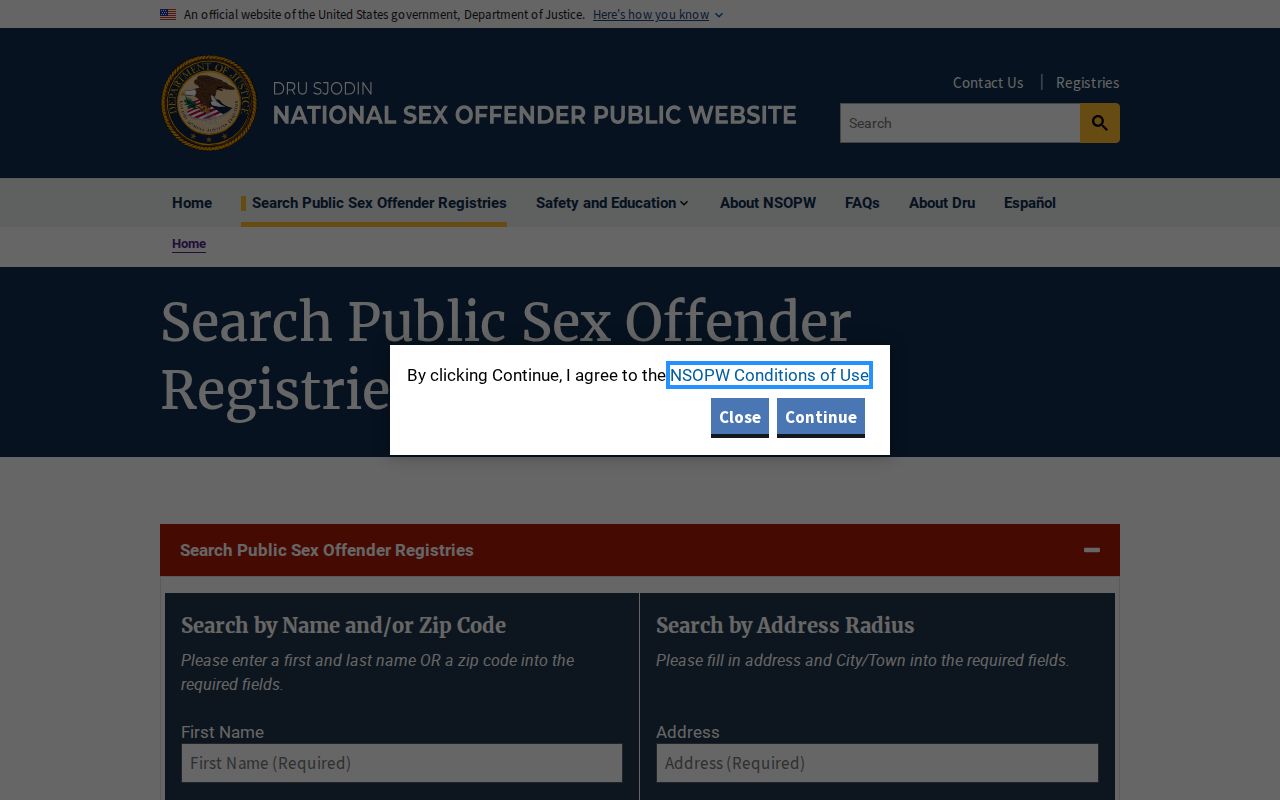
The national search broadens geography; it does not replace careful reading of Pennsylvania's source profile.
The NSOPW home service also explains its federated role.
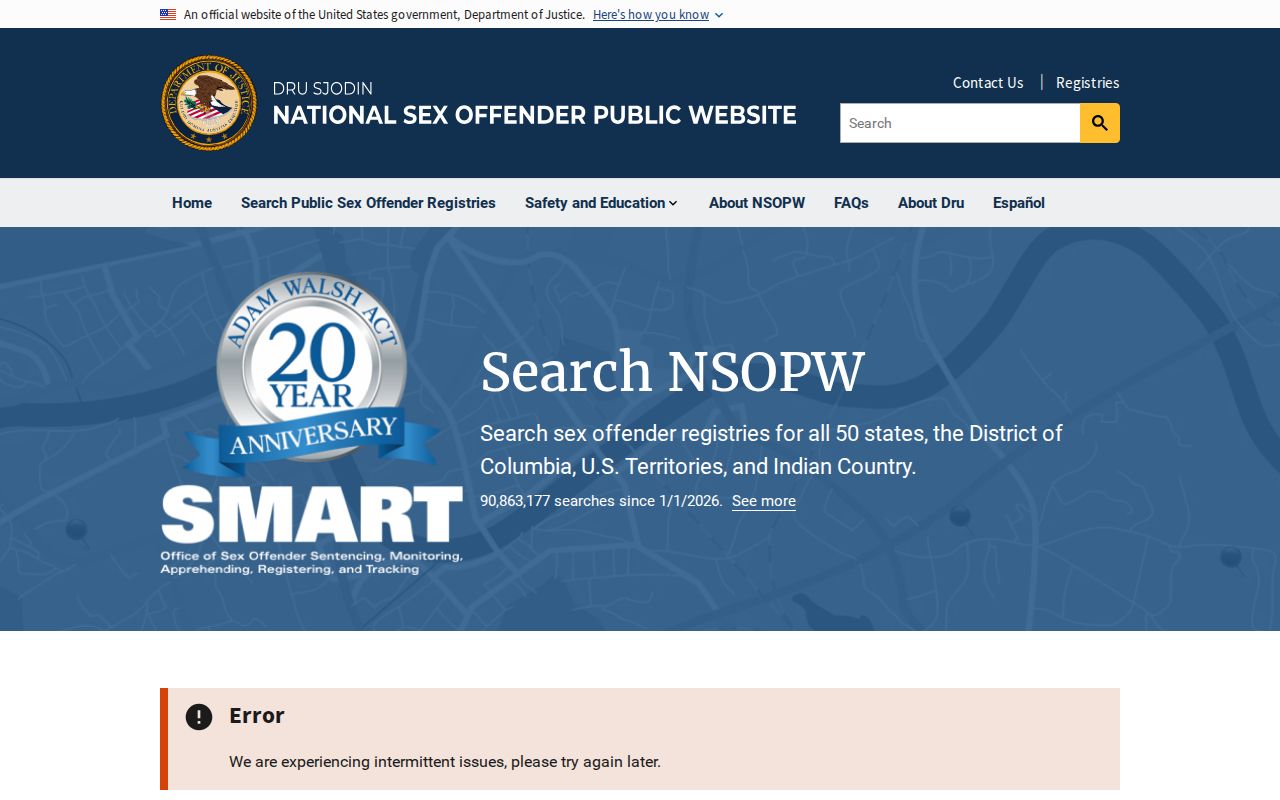
When NSOPW returns a Pennsylvania match, follow the jurisdiction link and confirm the details on the PSP record.
Pennsylvania Registration Levels and Requirements
Under 42 Pa.C.S. Chapter 97, Subchapter H, classification affects registration duration and in-person verification. Specified changes to residence, employment, education, and vehicle information also trigger reporting duties within statutory timelines.
| Classification | In-person verification | Duration and effect |
|---|---|---|
| Tier I | Annually | 15 years, subject to statutory reduction rules |
| Tier II | Semiannually | 25 years |
| Tier III | Quarterly | Lifetime |
| Sexually Violent Predator | Quarterly | Lifetime with enhanced notification |
PSP's registration information explains the classifications and duties.
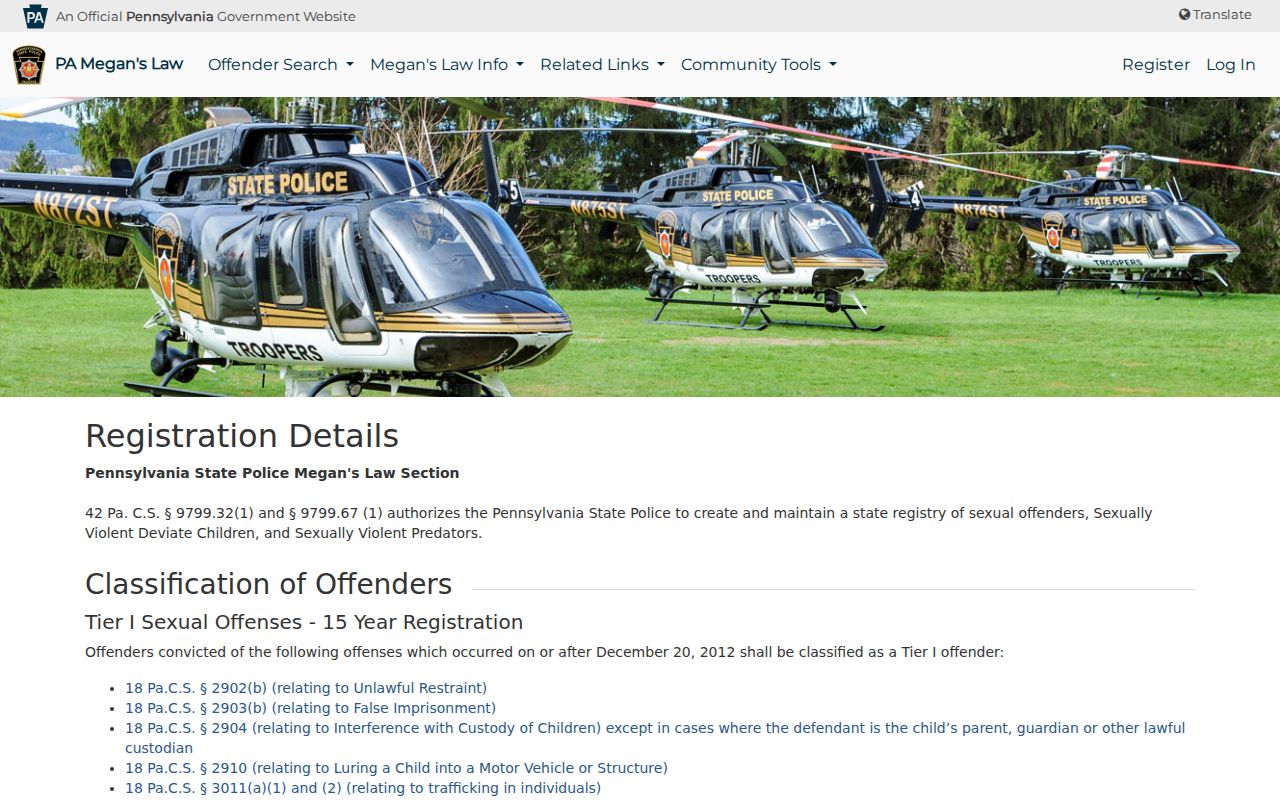
The published schedule explains why two profiles can show different verification cycles without either being late.
Two Chester County Verification Sites
PSP's approved directory identified two county locations for registration and verification. The county Sheriff's public counter was not listed as an approved location, so do not assume it can complete registration. Call before travel to confirm that a registering official is available.
PSP Avondale
2 Moxley Lane
Avondale, PA 19311
610-268-2022
PSP Embreeville
997 Lieds Road
Coatesville, PA 19320
610-486-6280
Chester County Adult Probation's Sex Offender Program is an intensive supervision service for court-ordered participants, not a substitute public registration counter. A person with a reporting obligation should confirm instructions directly with PSP.
When a Profile Looks Wrong
Do not confront the registrant or household. First recheck spelling, aliases, photographs, address details, and the last verification information. Then use the profile's PSP or local reporting instructions. Provide the exact profile and describe the possible mismatch without claiming that a crime occurred. Call 911 only for an immediate emergency.
Suspected noncompliance belongs with PSP or local law enforcement. An apparent old address can result from timing, a permitted transient status, or an actual reporting issue; the public cannot determine which from a map alone. Official review protects the community and avoids misidentification.
Safe response: Preserve the official record link, report the specific concern, and let trained authorities verify compliance.
SVP Notification and Tier Verification Differ
Tier labels establish duration and routine reporting frequency. Sexually Violent Predator designation carries quarterly verification and enhanced community-notification consequences. Those concepts should not be collapsed into one informal label. Read the classification exactly as PSP publishes it and avoid inventing a risk ranking from the offense title, address, or map distance.
Updates move from the registrant's required report and approved verification process into the state system. The public website may not reflect a real-world change instantly, which is another reason to report a suspected discrepancy instead of acting on it.
Community notification is also not the same thing as routine profile visibility. The designation and governing law determine whether enhanced notice applies; a searcher should not infer notification status from how prominent a map result appears. PSP's classification field, verification schedule, and official informational pages are the reliable sources. If a household receives an official notice, preserve the full document and use the contacts it provides for questions rather than circulating a cropped name or image without context.
Community Notification and Lawful Use
Registry information supports personal and family safety planning, identification, and appropriate community awareness. It does not authorize harassment, threats, intimidation, vigilantism, or interference with a registrant's household. Users should verify identity, keep the published context attached to any information they share, and contact authorities about suspected noncompliance.
Misuse is prohibited: Pennsylvania warns that registry information may not be used to threaten, intimidate, or harass a registrant or household. Review the duties and public-notification framework under 42 Pa.C.S. Chapter 97, Subchapter H, use official reporting channels, and never confront someone based on a search result.
A public listing reports a legal registration status; it does not grant permission to punish, exclude, or investigate a person privately. Responsible use means treating the profile as a safety notice, not as a substitute for a court judgment or law-enforcement assessment.